
THE SPECIALTY PROGRAMME, EXAM TASK AND ASSESSMENT CRITERIA OF THE INTRA-UNIVERSITY EXAM SUBJECT “DRAWING” FOR THE ADMISSION OF 2026-2027 ACADEMIC YEAR (ACCORDING TO UNDERGRADUATE AND CONTINUING AND INTEGRATED ACADEMIC PROGRAMMES)
Specialty- 073101.00.6 - “Architecture”
Subject- Drawing (A)
Specialty Programme.
The exam of the subject “Drawing” is aimed at testing and assessing the applicant’s volumetric spatial perception and representation skills, performance techniques, taking into account the exam requirements to perform the drawing task.
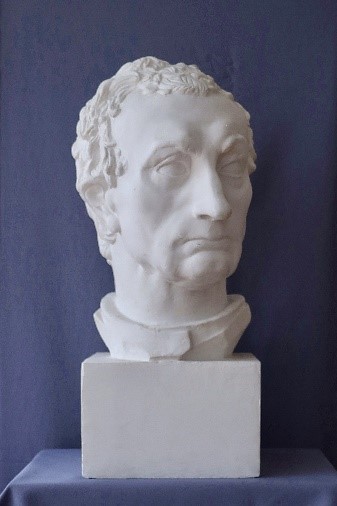
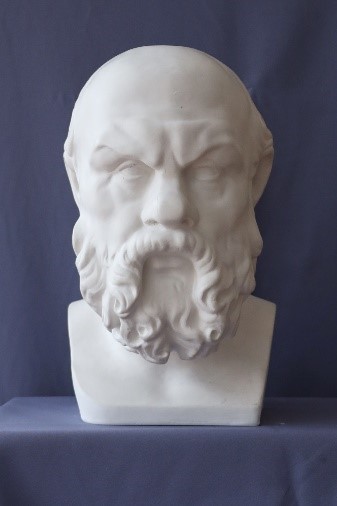
Applicants for the specialty 073101.00.6 “Architecture” draw a plaster bust (Gattamelata, Socrates, Homer) according to Form 1.
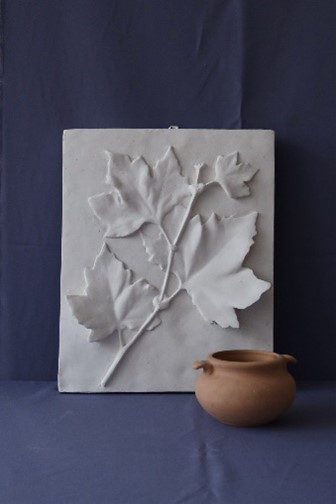
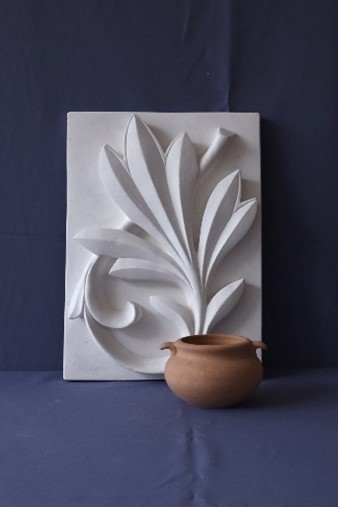
Applicants for the specialty 021201.00.6 “Design” draw a simple still life with a decorative plaster bas-relief (grape leaves, plant elements, apple) and a clay pot according to Form 2.
The selection of the plaster bust and bas-relief is done by lot.
The selection of the seats of applicants, according to numbering, is also done by lot.
The time allotted for completing the task is as follows:
For the exam in the specialty 073101.00.6 “Architecture”: 8 hours (240 minutes + 60 minutes break + 240 minutes).
The task is completed on A2 drawing paper (Whatman) using black graphite pencils of varying hardness.
Requirements for completing the exam task:
Assessment criteria for the task:
Total: 20 points
Pre-coded exam works are checked and graded by all members of the Committee according to the above-mentioned criteria. Then the total score obtained is averaged to 20.00 (twenty) points, with the preservation of hundredths. 7.5 or higher points are considered positive.
Plaster busts for applicants to the specialty “Architecture”.
 |
 |
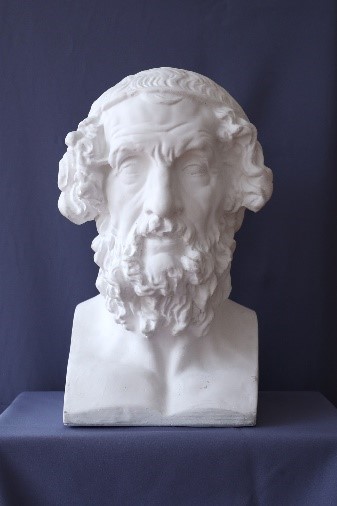 |
| a) Gattamelata | b) Socrates | c) Homer |
In case of questions, please call at tel.: 010-303-300 (extension: 9-33) or 010-58-01-56.
THE SPECIALTY PROGRAMME, EXAM TASK AND ASSESSMENT CRITERIA OF THE INTRA-UNIVERSITY EXAM SUBJECT “DRAWING” FOR THE ADMISSION OF 2026-2027 ACADEMIC YEAR (ACCORDING TO UNDERGRADUATE AND CONTINUING AND INTEGRATED ACADEMIC PROGRAMMES)
Specialty- 021201.00.6 - “Design”
Subject-Drawing (D)
Specialty Programme.
The exam of the subject “Drawing” is aimed at testing and assessing the applicant’s volumetric spatial perception and representation skills, performance techniques, taking into account the exam requirements to perform the drawing task.
Applicants for the specialty 021201.00.6 “Design” draw a simple still life with a decorative plaster bas-relief (grape leaves, plant elements, apple) and a clay pot.
The selection of the plaster bust and bas-relief is done by lot.
The selection of the seats of applicants, according to numbering, is also done by lot.
The time allotted for completing the task is as follows:
For the exam in the specialty 021201.00.6 “Design”: 6 hours (180 minutes + 60 minutes break + 180minutes).
The task is completed on A2 drawing paper (Whatman) using black graphite pencils of varying hardness.
Requirements for completing the exam task:
Assessment criteria for the task:
Total: 20 points
Pre-coded exam works are checked and graded by all members of the Committee according to the above-mentioned criteria. Then the total score obtained is averaged to 20.00 (twenty) points, with the preservation of hundredths. 7.5 or higher points are considered positive.
Still life with decorative plaster bas-relief and clay pot for applicants to the specialty “Design”
 |
 |
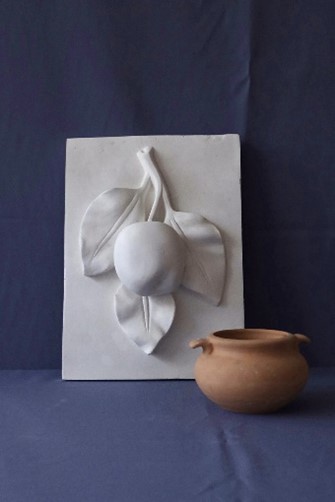 |
| a) With bas-relief of grape leaves and a clay jug | b) With bas-relief of a vegetable element and a clay jug | գ) Սոկրատեսas-relief of an apple and a clay jug |
In case of questions, please call at tel.: 010-303-300 (extension: 9-33) or 010-58-01-56.
THE SPECIALTY PROGRAMME, EXAM TASK AND ASSESSMENT CRITERIA OF THE INTRA-UNIVERSITY EXAM SUBJECT “COMPOSITION” FOR THE ADMISSION OF 2026-2027 ACADEMIC YEAR (ACCORDING TO UNDERGRADUATE AND CONTINUING AND INTEGRATED ACADEMIC PROGRAMMES)
Specialty- 021201.00.6 - «Design»
Subject- Composition
Specialty Programme.
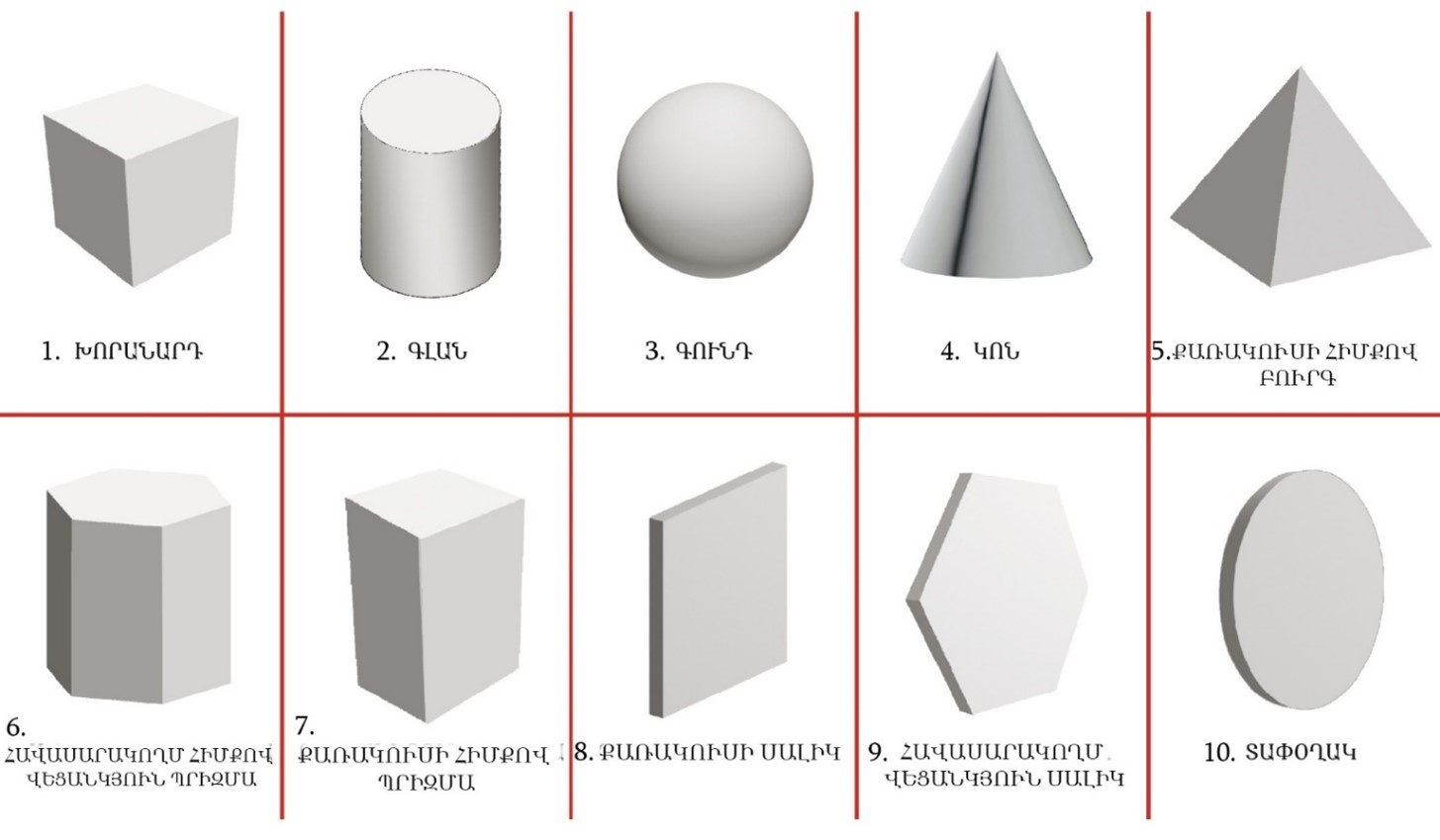
The applicant’s creative abilities and performance skills are checked and assessed by observing the submitted composition, in compliance with the exam requirements. The use of drawing tools is permitted. The selection of geometric bodies is done by lot (according to Form 1). The selection of the seats of applicants, according to numbering, is also done by lot.
Requirements for completing the exam task:
Create a three-dimensional volumetric composition by combining the selected geometric bodies, completing it according to the principles of two-point perspective or axonometric projection, with light and shadow processing.
To complete the task, from 10 (ten) geometric bodies (cube, cylinder, sphere, cone, quadrilateral pyramid, hexagonal prism, square prism, square tile, hexagon tile and torus) 5 (five) geometric bodies are selected by lot. Each selected body must be used two or more times in the exam task. At the same time, the depiction of any other bodies is prohibited.
Exam requirements.
Assessment criteria for the task:
If the completed exam task does not depict the bodies assigned by lot, or depicts only one body at a time, or other bodies that are not included by lot, then the exam task, regardless of the form and quality of performance, is not examined and not assessed.
|
№ |
Main criteria
|
№ |
Requirements |
Points |
|
|
1. |
Composition solution |
1 |
Competent placement of the composition in A3 format |
5 |
20 |
|
2 |
Original and figurative solution of the compositional idea |
||||
|
3 |
Application of the principle of combination of geometric bodies (intersection of one body with another) |
||||
|
4 |
Application of the principle of division of geometric bodies |
||||
|
|
5 |
Application of the principle of subtraction of geometric bodies |
|||
|
2. |
Solution |
1 |
Competent construction of combined (one body intersecting another) geometric bodies |
5 |
|
|
2 |
Competent construction of separated geometric bodies |
||||
|
3 |
Relief transformation and competent construction from geometric bodies by subtraction |
||||
|
4 |
Maintaining the requirements of perspective or axonometry constructed from two points |
||||
|
5 |
A linear weak expression of the construction of geometric bodies |
||||
|
3. |
Performance abilities and skills |
1 |
Light and shadow processing |
5 |
|
|
2 |
Tonal processing |
||||
|
3 |
Mastering the line drawing technique |
||||
|
4 |
Choosing the viewpoint of the composition |
||||
|
|
5 |
Maintaining symmetry |
|||
|
4. |
Work summary |
1 |
Task completion |
5 |
|
|
2 |
Presentation of the work |
||||
|
3 |
Expressiveness of the work |
||||
|
4 |
Complexity of the compositional idea |
||||
|
5 |
Full disclosure of the compositional idea |
||||
Total: 20 points
Pre-coded exam works are checked and graded by all members of the Committee according to the above-mentioned criteria. Then the total score obtained is averaged to 20.00 (twenty) points, with the preservation of hundredths. 7.5 or higher points are considered positive.
Geometric Bodies for the Exam Subject “COMPOSITION” of the Specialty “Design”
Plaster geometric bodies for applicants to the specialty “Design”.
In case of questions, please call at tel.: 010-303-300 (extension: 9-33) or 010-58-01-56.
THE SPECIALTY PROGRAMME, EXAM TASK AND ASSESSMENT CRITERIA OF THE INTRA-UNIVERSITY EXAM SUBJECT “TEST OF ASSESSING OF KNOWLEDGE AND CREATIVE ABILITIES (AKCA)” FOR THE ADMISSION OF 2026-2027 ACADEMIC YEAR (ACCORDING TO UNDERGRADUATE AND CONTINUING AND INTEGRATED ACADEMIC PROGRAMMES)
Specialty “073101.00.6 - Architecture”
Test of Assessing of Knowledge and Creative Abilities (AKCA)
Specialty Programme.
The test consists of 3 main sections (example in Appendix 1):
Requirements for completing the exam task:
MATHEMATICS section includes the following subsections:
All tasks in the “Mathematics” section of the test are based on public and high school topics.
2․1 Plane Geometry
2․2 Dimension
ARCHITECTURAL LOGIC section includes the following subsections:
The Test of Assessing of Knowledge and Creative Abilities includes four equally important questions of logical and visual thinking, the purpose of which is to assess the applicant’s spatial perception, analysis of forms and structural logic.
The section presents questions of a visual-logical nature, which are designed to guide the applicant to use their logical thinking around various architectural forms and schematic issues and to orient themselves within the framework of figurative forms. Architectural logical questions provide an opportunity to identify the applicant’s logical skills and visual attention, which is very important in the ability of architectural thinking.
The questions in the test are to test how quickly and accurately the applicant perceives the connections and patterns of shapes, how he finds missing parts or symmetries.
These exercises do not require any special knowledge: they assess the way of thinking, architectural imagination and the development of spatial thinking. The test allows you to find out whether the applicant has the basic abilities necessary to become an architectural student.
SKETCH DRAWING section includes the following subsections:
It is aimed at testing the applicants’ abilities to perform tasks with geometric patterns of a line and a circle, as well as the tangent of two circles.
The tasks of the Coupling section include:
It is aimed at testing the applicant’s ability to perform graphic work, the level of volumetric spatial perception and visualization.
The results of the first part of the task are filled in on the form (Form 1), and the second part, “Sketch Drawing”, is completed on A2 drawing paper.
The time allotted for completing the task and filling out the form is 5 hours, without breaks (300 minutes).
Assessment criteria for the task:
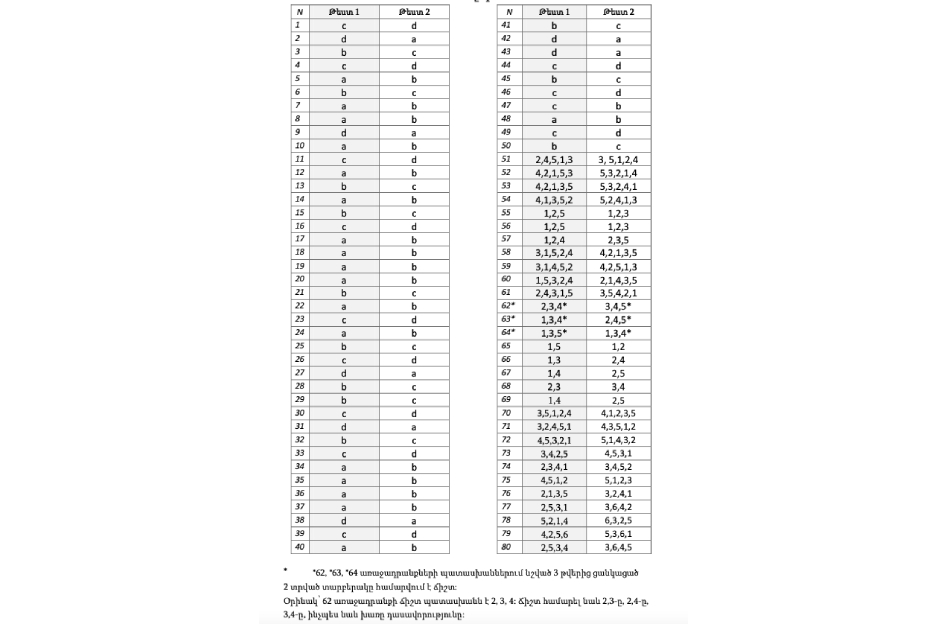
The test is not checked. Only the answer sheet is recognized and graded.
|
N |
Section |
Number of questions and tasks |
Point |
|
1 |
Mathematics |
36 |
9 |
|
1․1 |
Algebra |
16 |
4,0 |
|
1․2 |
Geometry |
20 |
5,0 |
|
2 |
Architectural Logic |
4 |
1 |
|
2․1 |
Architectural and Logical Questions |
4 |
1 |
|
3 |
Sketch Drawing |
2 |
10 |
|
3․1 |
Coupling |
1 |
4 |
|
3․2 |
Axonometry, section, cut, projection. |
1 |
6 |
|
|
Total |
42 |
20 |
Total: 20 points
Pre-coded exam works are checked and graded by all members of the Committee according to the above-mentioned criteria. Then the total score obtained is averaged to 20.00 (twenty) points, with the preservation of hundredths. 7.5 or higher points are considered positive.
You can find samples of the Test of Assessing of Knowledge and Creative Abilities in the attached files:
Attached are Sample tasks of the “Sketch Drawing” section of the AKCA:
In case of questions, please call at tel.: 010-303-300 (extension: 9-33) or 010-58-01-56.